
français
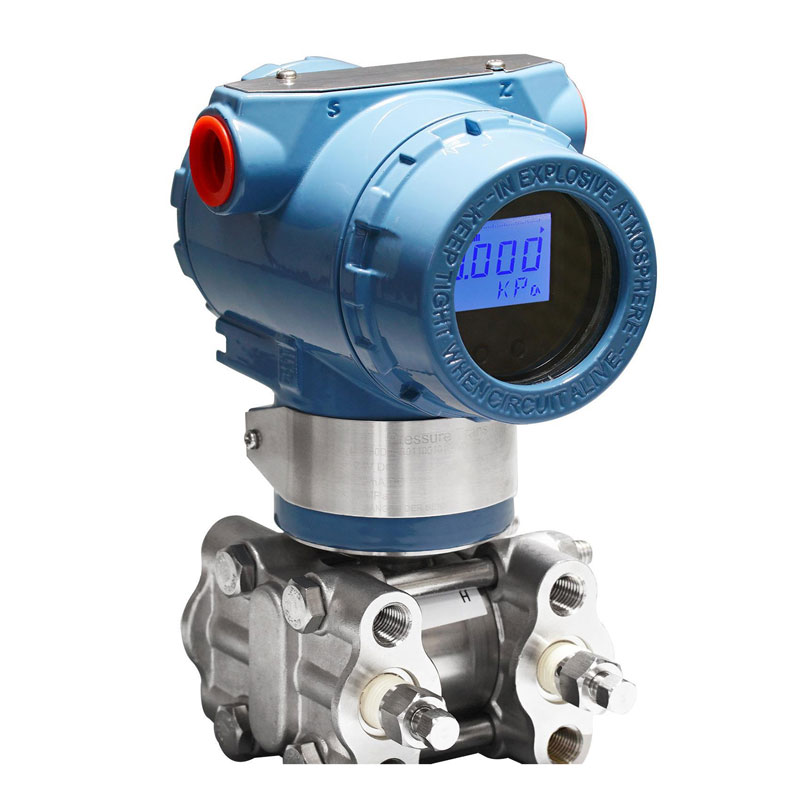
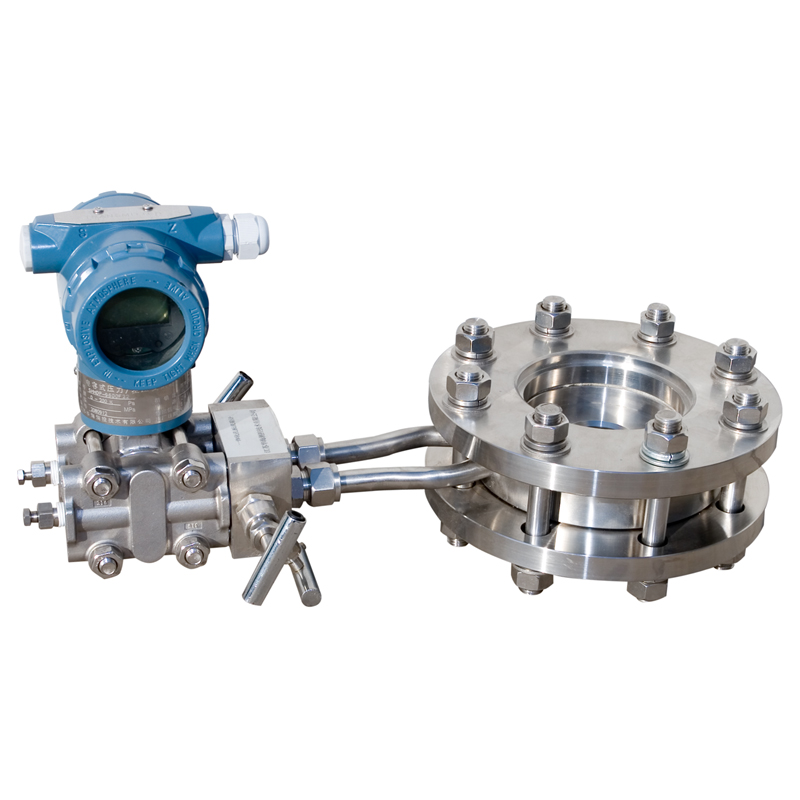
Le débitmètre de type plaque à orifice est un dispositif de pression différentielle pour mesurer le débit. Il peut être utilisé avec des transmetteurs de pression différentielle pour mesurer divers liquides ou gaz dans la canalisation ...
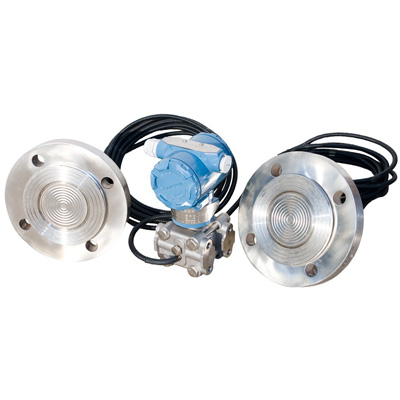
Le transmetteur de pression / pression différentielle SHDP / GP avec joints à membrane déportés fournit une sorte de moyen de mesure fiable pour éviter que le milieu mesuré n'entre directement en contact avec la membrane d'étanchéité du ...
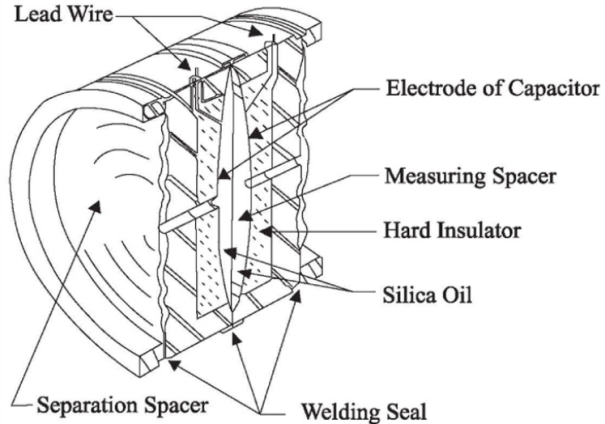
Capacitance pressure transmitter construction
Oxygen measurement requires extremely high safety and accuracy, and differential pressure transmitters based on metal capacitance principle are preferred. This type of transmitter uses high-quality metal capacitive sensors with a measurement accuracy of ± 0.1% FSO and long-term stability of ≤± 0.2%/URL (12 months). It can accurately capture differential pressure, gauge pressure, and absolute pressure data within the range of 0-20MPa. It has temperature compensation function and can still work stably in a wide temperature environment of -40 ℃~105 ℃. With a fast response time of 0.25s, it fully adapts to the measurement needs of oxygen in industrial scenarios. At the same time, the flexibility of digital electronic technology makes equipment operation more convenient.
Silicone oil is commonly used to fill the diaphragm of ordinary differential pressure transmitters, but contact between oxygen and silicone oil can easily cause flammable and explosive risks, seriously threatening industrial production safety. For oxygen measurement, fluorine oil (fluorocarbon oil) must be selected as the filling fluid to avoid safety hazards from the source.
In addition, the sealing gasket needs to be matched with PTFE material, which has strong chemical stability, does not react with oxygen, and has excellent sealing performance, effectively preventing medium leakage and further ensuring the safety of the measurement process.
Oxygen is a flammable and explosive medium, and its explosion-proof performance must be strictly controlled in the corresponding measurement environment. When selecting, priority should be given to ATEX approved pressure and DP transmitters. We recommend Exd II BT4 explosion-proof or Exia IIC T6 explosion-proof, both of which can effectively avoid the generation of ignition sources during equipment operation.
At the same time, the equipment needs to support HART protocol or MODBUS RS485 communication, which can be linked with the control system in real time. Once a fault occurs, it can be alerted in a timely manner by outputting alarm current, ensuring the safe operation of the industrial site.
In addition to filling fluid and sealing gaskets, the compatibility of other materials also directly affects measurement safety.
The sensor membrane is recommended to use SUS316L or Hastelloy C-276, which have both corrosion resistance and high temperature resistance, and can adapt to special working conditions of oxygen;
It is recommended to choose SUS304 or SUS316L as the material for process connection to avoid chemical reactions between the material and oxygen.
The enclosure protection level should reach IP65 or IP67, which can adapt to the humid and dusty environment of industrial sites and extend the service life of equipment.
What are the precautions for installing an oxygen differential pressure transmitter?
After installation, the zero point calibration function can be used to eliminate position influence and ensure measurement accuracy. The power supply needs to meet the requirement of 10-32V, and if using the HART protocol, it needs to be ≥ 18.5V. The process connection can be selected according to the on-site requirements, such as 1/4 "NPT (F), 1/2" NPT (M), M20 × 1.5 (M), etc. After installation, the sealing performance needs to be checked to avoid oxygen leakage.
nous vous répondrons dans 24 heures..