français
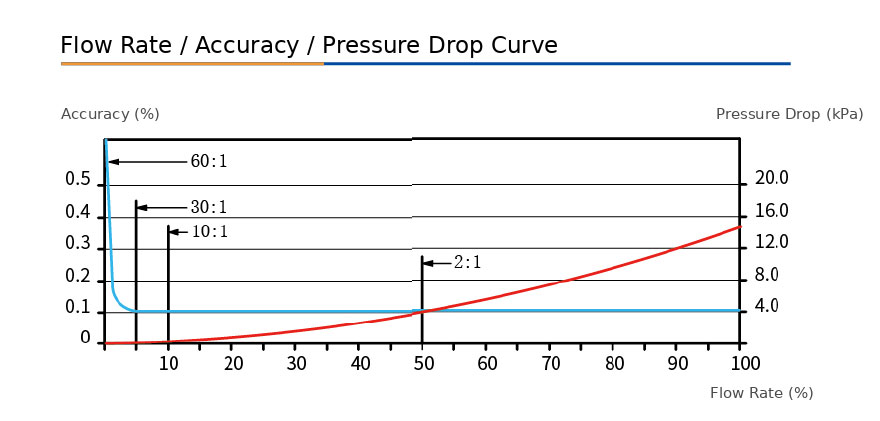
Le débitmètre Coriolis de la série SH-CMF a fourni une précision de 0,1 ~ 0,2% de la mesure du débit massique, c'est le débitmètre le plus précis , ce type de débitmètre de haute précision est maintenant fréquemment demandé et acheté ces dernières années. Le compteur Coriolis est une avancée majeure dans la mesure du débit massique; il peut mesurer le débit massique, la température et la densité des fluides par un seul capteur de débit.
Lorsque nous parlons de la précision des débitmètres Coriolis , nous devons tenir compte de 3 facteurs:
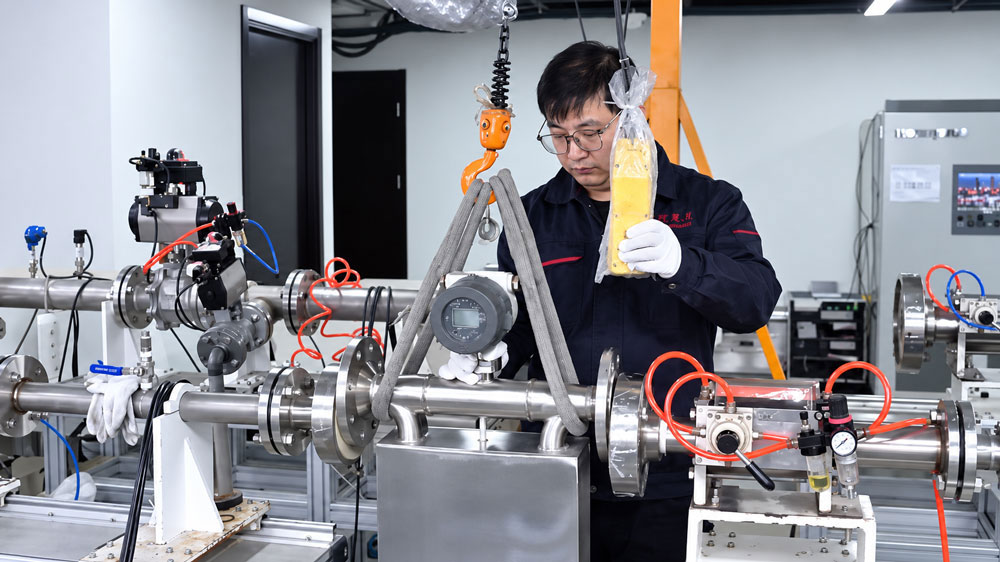
Voyons ci-dessous trois images pour l'excellente précision du débitmètre SH-CMF mss.
Précision du débit instantané: ± 0,2%, débit ± [(stabilité nulle / valeur de débit) × 100]%
Temps de réponse du débit: 1 seconde (réglable) 
Précision de densité: ± 0,002g / cm³ (liquide)
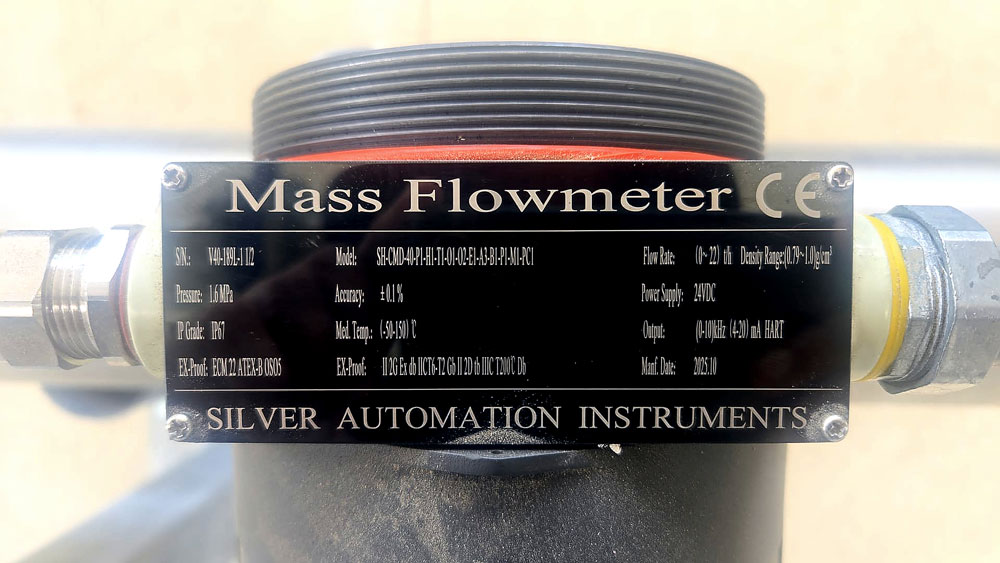
Précision de la température: ± 1 ° C 

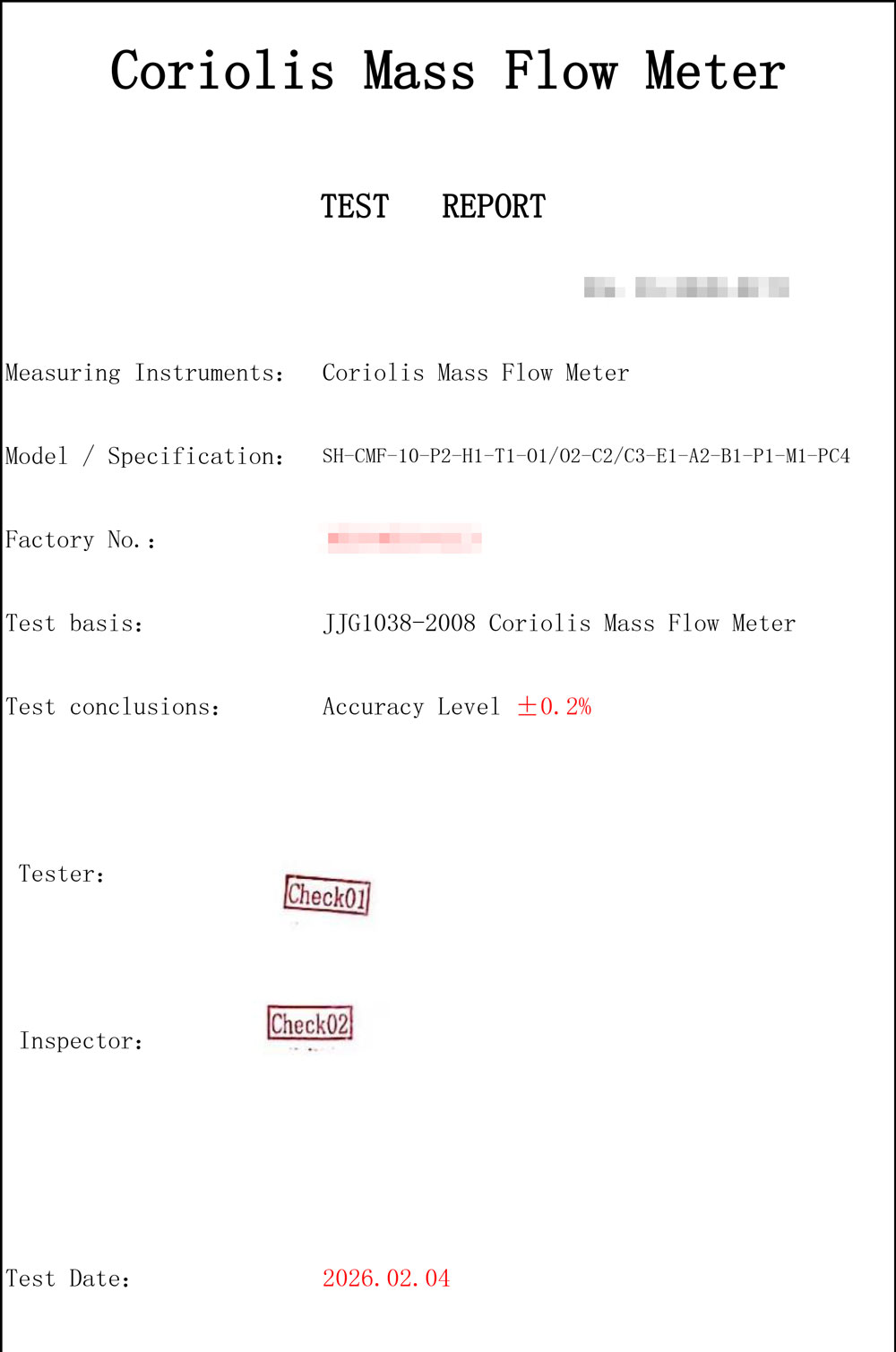
| Field | What it tells you |
| Testing medium, temperature, pressure | Test conditions; water at about 15 °C and 0.2 MPa |
| Flow range and instrument range | The range set for your order, e.g. 60–600 kg/h; not necessarily the full sensor range |
| Range percentage and tested value | The 4 test points: full scale, then 50%, 20% and 10% of the set range |
| Average accuracy Ei | The error at each test point, in % |
| Accuracy level E | The largest error found across all points |
| Repeatability Er | How closely repeated runs agree |
| Output type | Pulse factor, e.g. 60,000 pulses per kg |
| Precision curve | The Ei values plotted against the test points |
Our calibration information page describes the test rigs and methods used at the factory.
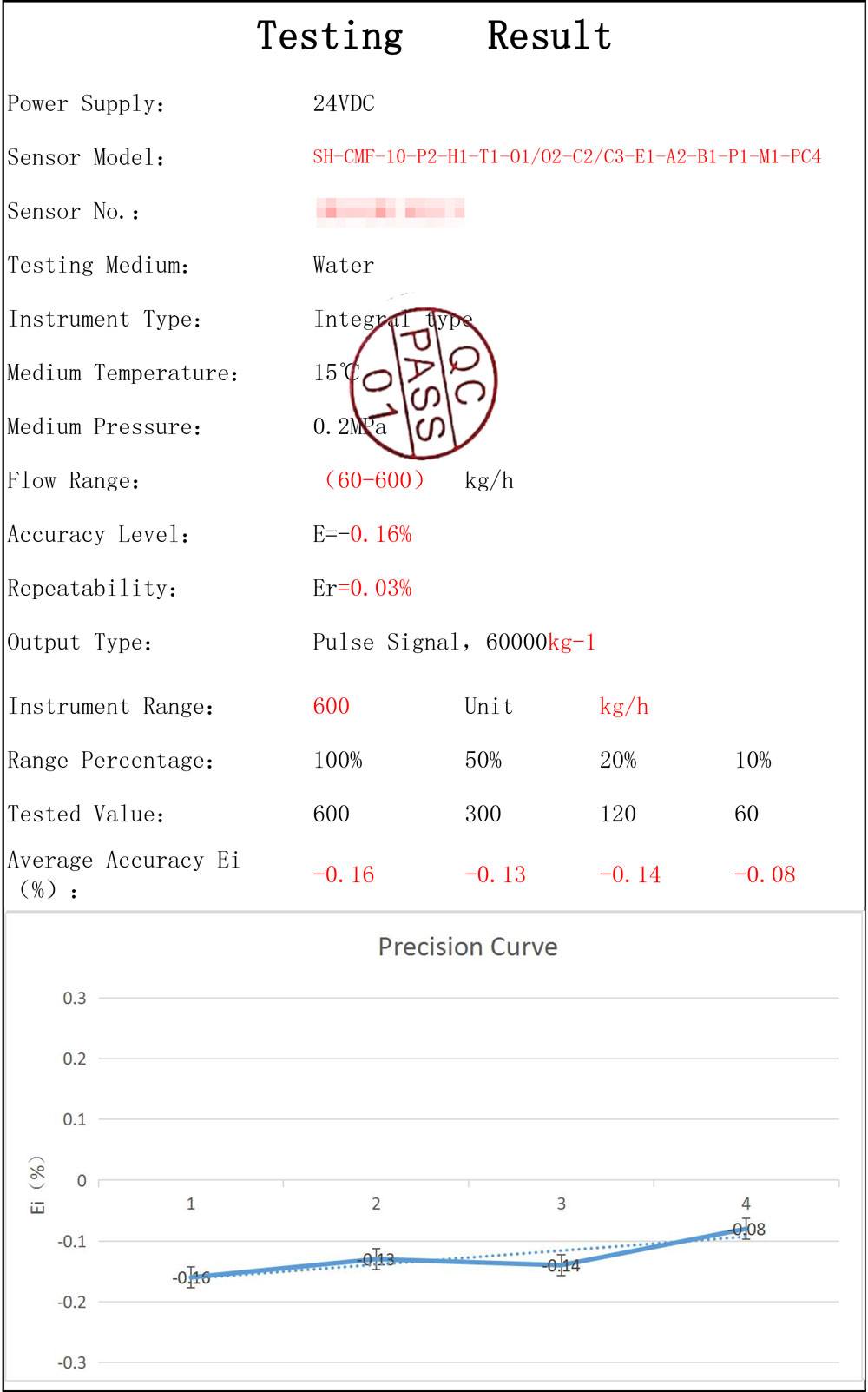
Reading the report means checking that every test point is inside the ordered grade, and then looking at how the error changes across the range. Two recent SH-CMF reports show how this works.
| Point | DN10 meter, ±0.2% grade, range 600 kg/h | 3" meter, ±0.5% grade, range 12 t/h |
| Full scale | 600 kg/h: −0.16% | 12 t/h: −0.09% |
| 50% | 300 kg/h: −0.13% | 6 t/h: −0.06% |
| 20% | 120 kg/h: −0.14% | 2.4 t/h: −0.12% |
| 10% | 60 kg/h: −0.08% | 1.2 t/h: −0.17% |
| Accuracy level E | −0.16% | −0.17% |
| Repeatability Er | 0.03% | 0.03% |
Three points to check on any report:
The serial number on the report should match the nameplate. Keep the report with the meter records; it is the baseline for any later recalibration.
Density measurement accuracy on the SH-CMF is typically ±0.001 to ±0.002 g/cm³ for liquids, within a density range of about 0.5–2.5 g/cm³. The meter measures density from the vibration frequency of the tubes, and the reading can be shown on the display or sent as a 4–20 mA output. Temperature measurement accuracy is ±1 °C.
The standard factory report does not include a density or temperature test; it covers mass flow only. If density is used for concentration, Brix or quality control, tell us at the order stage so the density requirement is reviewed before the meter is built. Questions on density outputs, gas service and other options are answered in the SH-CMF FAQ.
Factory calibration is the standard water test done on every meter before shipment, while third-party calibration is an extra test at an independent laboratory, used when a contract, regulator or auditor requires it.
| Point | Factory calibration | Third-party calibration |
| Included as standard | Yes | No, extra cost |
| Delivery time | Standard (10–12 working days for standard configurations) | Longer |
| Test medium | Water | Depends on the laboratory |
| When to choose | Process control, batching, internal accounting | Custody transfer, contracts or audits that name an independent laboratory |
Water is the normal test medium because a Coriolis meter measures mass directly, so a mass calibration on water applies to other liquids. Recalibration is usually recommended every one to two years. Shipping a meter back to the factory overseas is costly, so most users recalibrate at a local independent facility and compare the result with the original report.
Send us these details and we will confirm the grade, sizing and documents you need:
Silver Automation Instruments replies within 24 hours with a recommended model code and quotation. Contact our engineers with your details.